

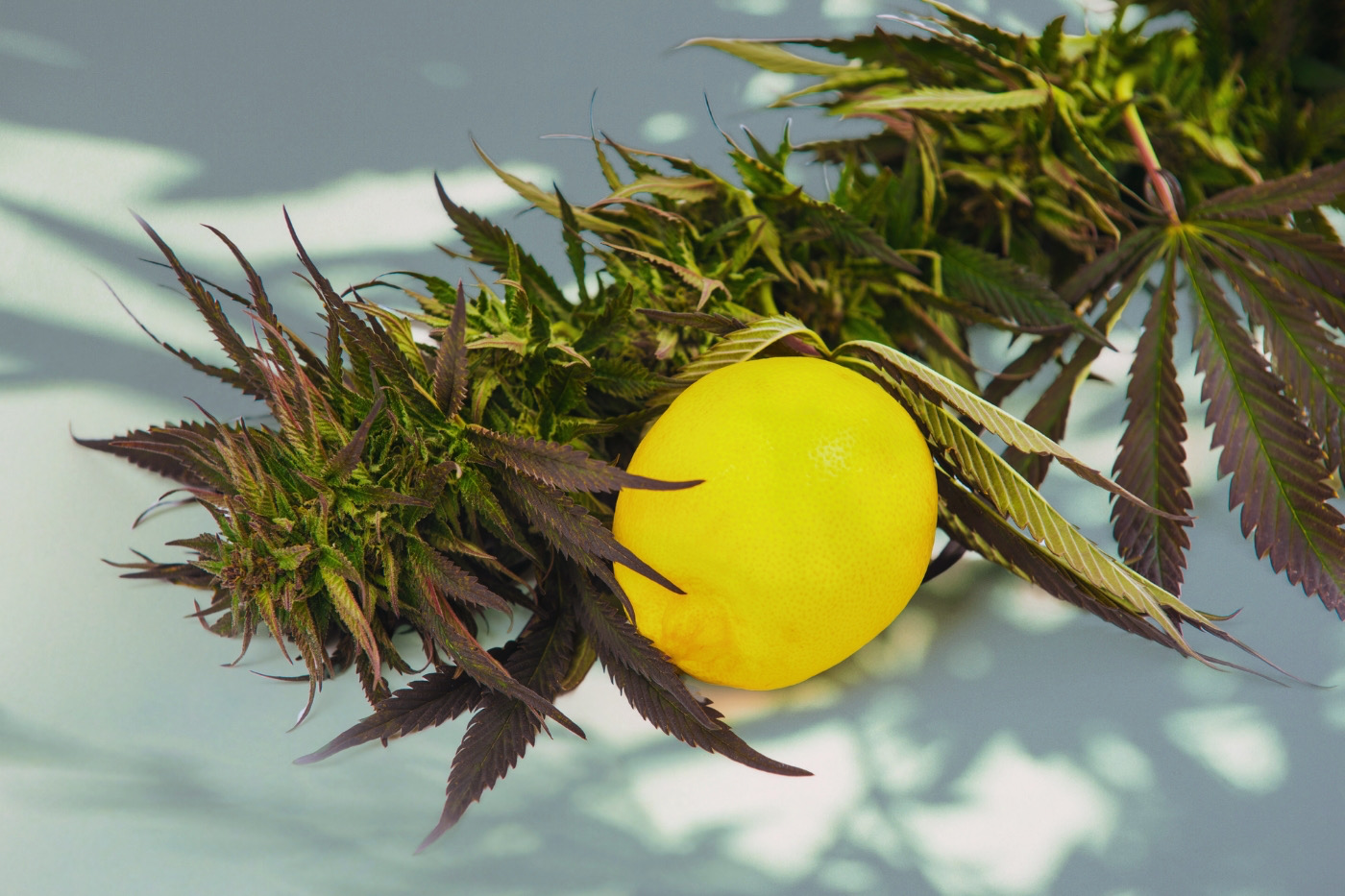
By this point, if you have a Utah medical card or passing interest in cannabis, you’ve heard of terpenes. Maybe you’ve even heard of botanical-derived terpenes and cannabis-derived terpenes. What’s the difference, and why does everybody have strong opinions on which to use?
First of all, what is the difference between cannabis-derived and botanical-derived? In its simplest terms, cannabis-derived terpenes (CDTs) are extracted from the cannabis plant. Botanically-derived terpenes (BDTs) describe terpenes extracted from ANY plant. So all CDTs are botanically-derived, but most BDTs are not cannabis-derived. It gets more complicated than that though. It’s helpful to think of terpenes as the molecular ingredients of essential oils. When we extract the aromatic parts of a plant, whether cannabis or anything else, we are extracting an oil composed of a whole bouquet of different molecules known as terpenes. Every plant has its own unique ratio of those terpenes.
When you buy CDTs, you are basically buying the essential oil of a given cannabis plant. In theory, this is a wonderful way to go and can have great benefits; but it’s hard to pull off in practice, so make sure you know exactly what you are getting when you go that route.
First off, due to the high cost of medical cannabis, most added terpenes are extracted from industrial hemp. Hemp is, of course, cannabis, and not an inferior plant for having less THC. That said, hemp has not been cultivated to have the same strains, or standards of taste and effect as medical cannabis.
The second variable to be aware of is the method of extraction. Many CDT manufacturers use butane in their process. Keep an eye out for resin (versus rosin). Resin, by definition, is made using butane, whereas rosin is made with ice water, and thus considered solventless. While butane extraction is allowed in Utah, at Boojum, we do not believe in putting anything that may contain even trace amounts of butane into our products. Additionally, botanically-derived terpenes must be tested for not only their potency, but purity as well, ensuring that there are no heavy metals, pesticides, microbials, or residual solvents present. Utah patients, especially those with delicate health, deserve to have the cleanest products possible. This is one of the main reasons we stay away from resin CDTs.
When getting CDTs from medical cannabis or hemp, you are getting a unique product every time. Because they are bouquets of terpenes, a “Blue Dream” essential oil is going to vary, not only between hemp and medical cannabis, but between plants, between batches, and between cultivators. This is cool in theory and for those liking to experiment and try new things when it comes to their cannabis. However, for patients or others who rely on a consistent product with reliable and replicable results, it’s probably not the best answer.
When we talk about CDTs, we are talking about a certain strain’s essential oil. This might be a ratio of myrcene, pinene, linalool, or any of the roughly 200 other terpenes found in cannabis. Each individual terpene in that oil is a specific molecule that is found in many different kinds of plants, and is identical in every one. When you read any scientific paper or study done on a terpene like β-caryophyllene or α-pinene, it is always done on BDTs. If you read about the effects of D-limonene or β-Myrcene, you are reading about the effects of BDTs. If you are looking for a product with a single terpene, you are looking for something with a BDT.
Because cannabis is far more expensive than eucalyptus, lavender, or lemons, and because it has so much less terpineol, linalool, or limonene than those other plants, it is prohibitively expensive to isolate terpenes from cannabis. Even if that were not the case, research on cannabis (and thus CDTs) has been severely restricted over the last century, while molecular research on other plants has flourished. Even though a given terpene has the exact same molecular structure whether it is found in cannabis or other plants, all science-based terpene research has been done on BDTs, and not CDTs.

Here at Boojum, we believe that there is a place for all terpenes as long as they are safely extracted from plants—whether those plants are cannabis or not. But are you aware that there are some terpenes that are not naturally derived at all? Artificial terpenes, also known as synthetically-derived terpenes, are yet another category. These are produced in a lab, and not extracted from plants at all. We recommend giving these a wide berth, at least until there’s more research on how they’re made and how they affect the body long-term.
Whether to use products with BDTs or CDTs is ultimately a decision that comes down to what exactly patients want from their medicine. For patients who can get their hands on CDTs from rosin, or other clean extraction methods, and who want the taste and effects to stay as true to the original cannabis plant as possible, CDTs are a good option. For patients who want specific targeted effects with reliable and reproducible results, and who want to understand how individual terpenes affect them, botanical terpenes are a better fit. Whatever you choose, we hope you find your personal plant panacea!

Here are a few articles if you want to learn more about terpenes!
Pellegrini, M., et al. (2018). Terpenes and terpenoids in plants: Interactions with environment and insects. International Journal of Molecular Sciences, 19(11), 3272. https://doi.org/10.3390/ijms19113272
Russo, E. B. (2011). Taming THC: Potential cannabis synergy and phytocannabinoid-terpenoid entourage effects. British Journal of Pharmacology, 163(7), 1344-1364. https://doi.org/10.1111/j.1476-5381.2011.01238.x
Weston-Green, K., Clunas, H., & Jimenez Naranjo, C. (2021). A review of the potential use of pinene and linalool as terpene-based medicines for brain health: discovering novel therapeutics in the flavours and fragrances of cannabis. Frontiers in psychiatry, 12, 583211.